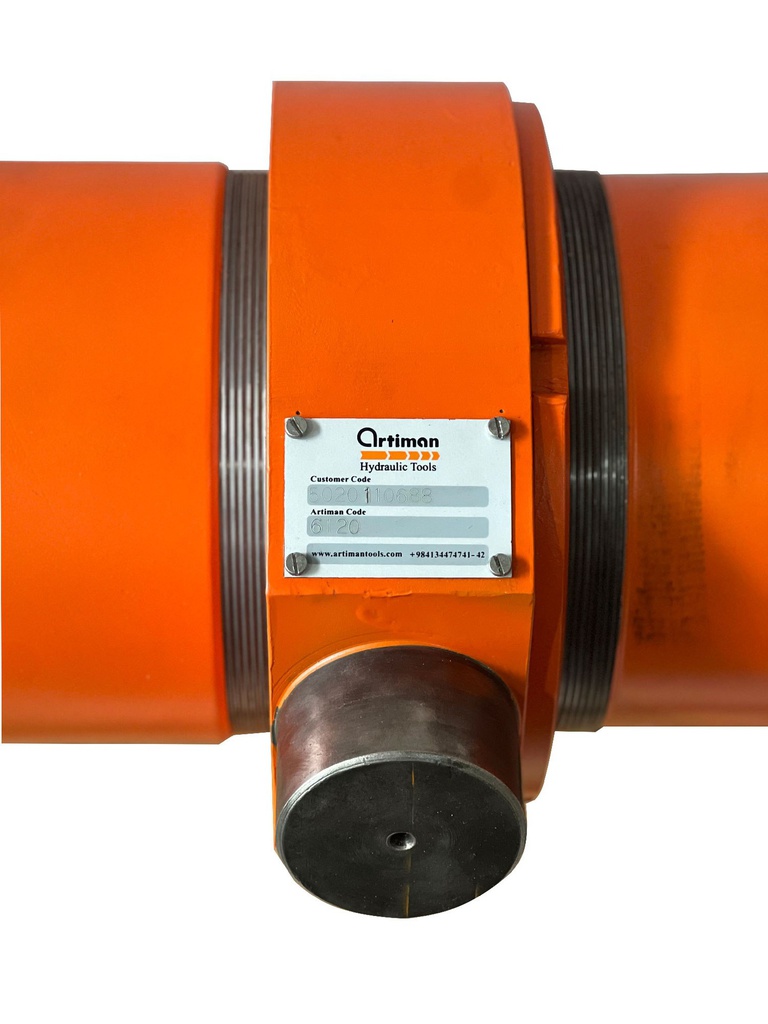
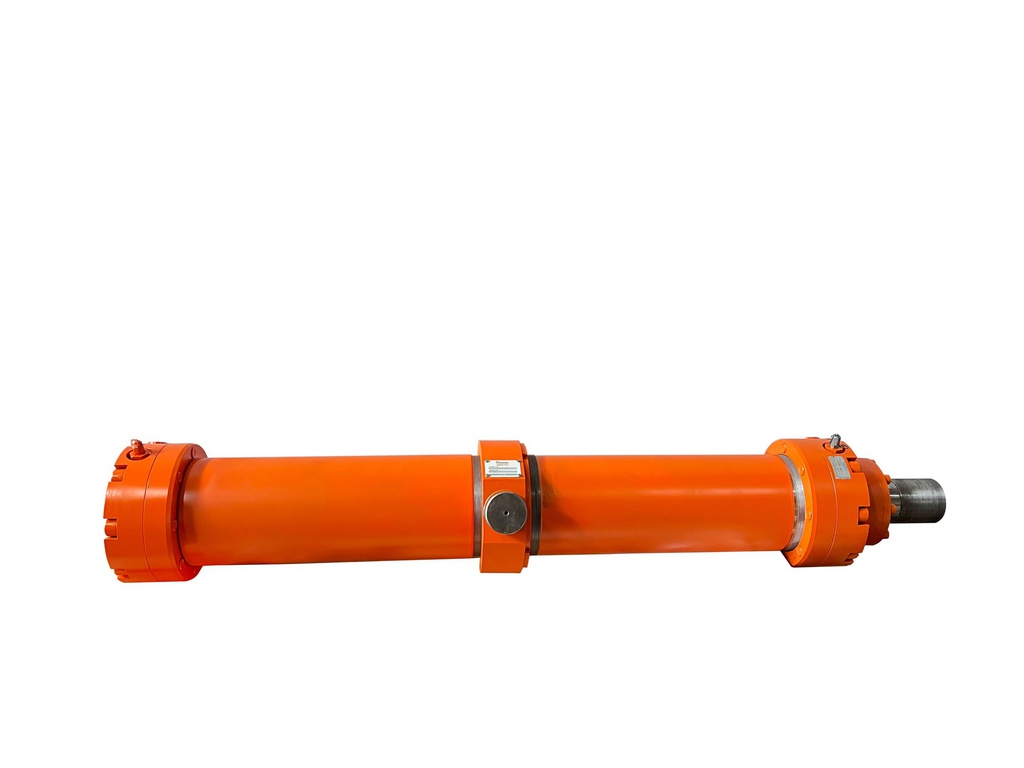
The hydraulic cylinder is one of the most important components of hydraulic systems, used to create linear motion or mechanical force. This device converts hydraulic energy (oil pressure) into movement or force and has a wide range of applications in various industries and equipment. Hydraulic cylinders are used in industrial machinery, vehicles, construction equipment, mining, oil and gas, petrochemical industries, and also in heavy machinery such as cranes and lifts.
Structure of a Hydraulic Cylinder:
Generally, a hydraulic cylinder consists of a cylindrical tube, piston, shaft (rod), and caps:
- Cylinder Tube: It is a chamber where hydraulic oil is pressurized, and the piston moves within it.
- Piston: It is a component on which the pressure of the oil is applied, causing the shaft to move.
- Shaft (Rod): It is a rod connected to the piston that converts the generated force into motion.
- Covers and Seals: These components prevent oil leakage and maintain the necessary pressure within the system.
Types of Hydraulic Cylinders:
- Single-Acting Cylinder: In this type, hydraulic oil enters from only one side and moves the piston in one direction. The return of the piston is typically achieved by spring force or gravity.
- Double-Acting Cylinder: In this model, oil enters and exits from both sides, allowing the piston to move in both directions. This type is suitable for applications that require precise control in both directions.
Applications of Hydraulic Cylinders:
- Industrial Machinery: Used for pressing, pulling, or lifting heavy object.
- In heavy vehicles, especially in steering and suspension systems.
- In construction machinery such as excavators, cranes, and lifts.
- Aircraft Equipment: Used in landing gear and wheel-lifting systems.